
Visualization Techniques for Manifestation
A detailed guide to powerful mental imagery methods that help clarify intentions, align your focus, and bring your deepest desires closer to reality.
Manifestation isn’t just about positive thinking—it’s about actively engaging your imagination and brain to reinforce your intentions with clarity and emotional resonance. Visualization techniques are among the most effective tools in this process because they help train your brain to notice opportunities, sustain motivation, and align subconscious belief systems with your goals.
Below, you’ll learn practical and science‑informed visualization techniques you can integrate into your daily practice.
🧠 Why Visualization Matters
Visualization works because your brain’s neural pathways fire similarly when you imagine something vividly and when you experience it in real life. This is why athletes use mental rehearsal to enhance performance: imagined practice activates relevant brain networks just like physical practice does.
In manifestation, visualization helps you:
Clarify what you want by creating detailed mental images of the goal
Boost confidence and focus by mentally “experiencing” success
Maintain positive emotional states that support action
Prime your brain to recognize opportunities that align with your vision
🔮 1. Vision Boards
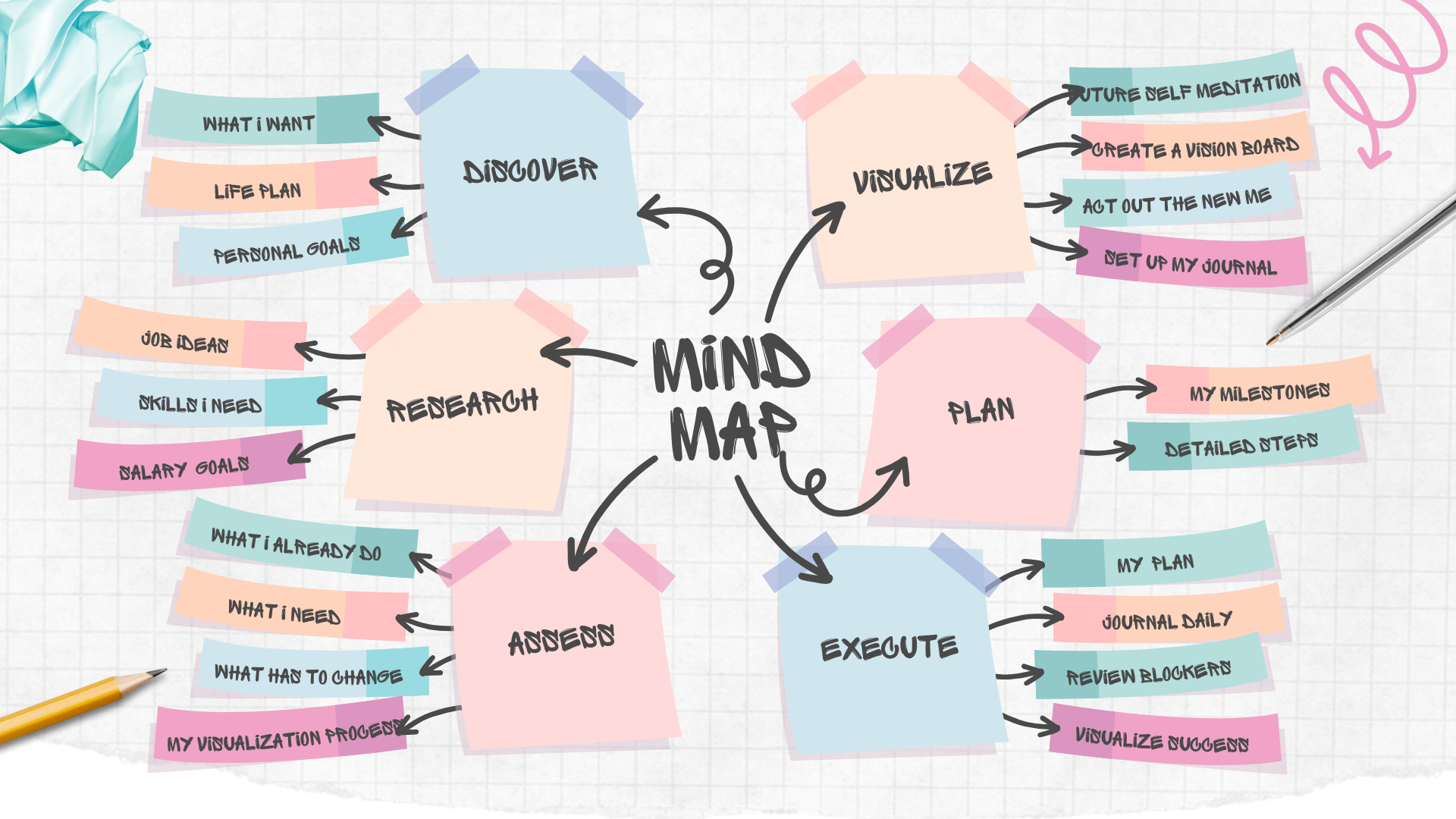
Vision boards are physical or digital collages of images, words, and symbols representing your goals and aspirations. Place them somewhere you’ll see often—on your wall, phone wallpaper, or planner.
Research suggests visual stimuli improve memory retention and help maintain focus on intentions over time.
How to do it:
Collect pictures or words that represent your goals.
Arrange them visually in a way that feels inspiring.
Spend a few minutes each day absorbing the board.
🧠 Tip: Add emotion—imagine how achieving each goal feels as you look at the board.
🧘 2. Mental Theater Visualization
This technique invites you to imagine yourself as the main character in your life’s ideal “movie.” Sit relaxed, close your eyes, and picture a detailed scene:
Where are you?
What’s happening?
Who’s with you?
What sounds or sensations fill the moment?
This immersive visualization makes experiences feel emotionally real in your mind and influences motivation and focus.
📜 3. Guided Visualization
Guided visualization uses spoken scripts, music, or audio guidance to lead you step‑by‑step into your desired scenario. This method is helpful for beginners or anyone who finds it difficult to sustain internal imagery alone.
How to do it:
Choose a quiet space and a guided recording.
Close your eyes and follow along.
Engage all senses—vision, sound, feeling.
Some modern practitioners also integrate brainwave audio tools like The Genius Wave during guided visualization to help the mind enter relaxed mental states where imagery feels more vivid and engaging.
🧘♀️ 4. State Akin to Sleep (SATS) Visualization
The SATS method involves visualizing during the hypnagogic state—the relaxed, dreamy moment between wakefulness and sleep. Visualization in this stage can feel especially powerful because the subconscious is more receptive.
How to practice:
- Lie down comfortably.
- Let your body relax as you stay mentally aware.
- Imagine your goal unfolding in rich detail.
The images you create during this transitional state can help reinforce intentions in ways that bridge conscious and subconscious awareness. A detailed exploration of this constraint—and its implications—is addressed here:
→ Why Manifestation Isn’t Working for You (The Hidden Block Nobody Talks About)
✍️ 5. Scripting
Scripting is a written form of visualization where you describe your ideal day or outcome in present tense, as if it’s already happening.
Example:
“I wake up feeling energized. I check my inbox and see multiple opportunities aligned with my goals. I feel grateful and confident.”
Writing these details helps engage both logical and imaginative parts of your brain.
This technique serves as both visualization and affirmation.
🪞 6. Mirror Visualization
The mirror technique combines self‑affirmation with visualization. Sit or stand in front of a mirror, look yourself in the eyes, and internally see your success as you speak your goals confidently.
Why it’s effective:
Combining visual feedback with self‑directed statements reinforces belief and engages your self‑image.
Pair this with expressive, positive feelings to deepen the impact.
🧠 7. Sensory Immersion
Instead of just “seeing” your goal, sensory immersion asks you to imagine every detail across all five senses:
- What does success sound like?
- What does it feel like in your body?
- What smells are present?
This helps create a multi‑dimensional mental experience that resonates more deeply with the subconscious mind.
🧠 Bonus Technique: Future Self Letter
Write a letter from the perspective of your future self who has already achieved the goals you’re manifesting. What advice would they give? How do they describe their day?
This method helps solidify not just what you want, but the identity aligned with having it.
📌 How Often Should You Visualize?
Morning & before sleep are often the most effective times because the conscious mind is less active.
5–10 minutes daily is often more impactful than longer but inconsistent sessions.
💡 Avoid Common Visualization Mistakes
- Focusing only on outcomes (imagining the result without emotion)
- Doing it mechanically without sensory detail
- Expecting instant results (consistency is key)
For deeper insight into what blocks manifestation practices, see Why Manifestation Sometimes Fails.
Final Thoughts
Visualization is a core element of many manifestation systems because it helps train your brain’s focus, belief, and emotional state toward desired outcomes. When practiced regularly with clarity and sensory involvement, it strengthens neural patterns that support confidence, goal pursuit, and opportunity recognition.
Whether you use vision boards, guided imagery, or SATS typing, the key is emotion and consistency.
If you want a comprehensive step‑by‑step routine that builds visualization into your mornings, check out the Morning Manifestation Routine next.
If you're new to manifestation practices, you may want to begin with our Complete Guide to Manifestation and the Law of Attraction, which explains the foundational principles behind these techniques.


